
The Aspen Institute Names Wallace State (Hanceville, Ala.) as a Finalist for 2027 $1 Million Aspen Prize for Community College Excellence
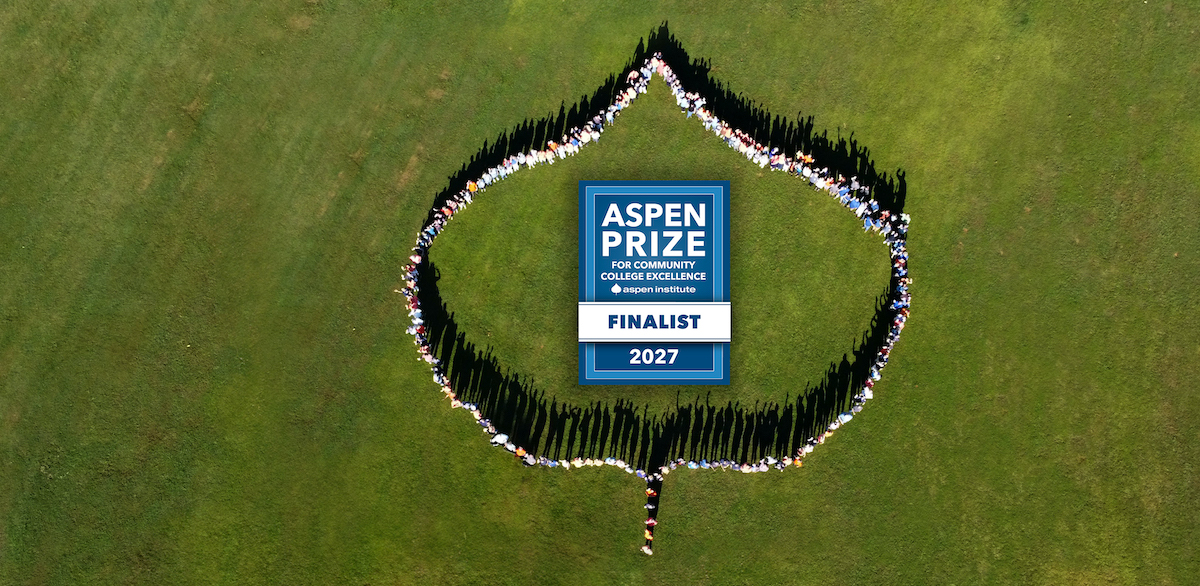
Wallace State Community College Named One of 10 Community Colleges Advancing in National Prize Recognizing Excellent Student Outcomes
CONTACT: Kristin O’Keefe, (240) 351-8531, kristin.okeefe@aspeninstitute.org
Hanceville, Ala., June 9, 2026 – Today, the Aspen Institute (Aspen) named Wallace State Community College (Hanceville, Ala.) as one of 10 community colleges as finalists for the 2027 Aspen Prize for Community College Excellence, the nation’s signature recognition for community colleges. Backed by $1 million in award funds, the Aspen Prize honors colleges that achieve strong outcomes, focusing on whether students complete credentials that lead to bachelor’s attainment and jobs that pay family-sustaining wages.
 “Wallace State is honored to be recognized as one of ten finalists in the 2027 cycle
of the Aspen Prize for Community College Excellence,” said Wallace State President
Vicki Karolewics. “Wallace State’s mission is to provide education that transforms
lives and communities, and we accomplish that mission by equipping and empowering
our students to harness the power of opportunity to make their lives better. Wallace
State’s faculty and staff have, for years, engaged in reforms designed to improve
student success toward social and economic mobility, and this finalist designation
is a testament to the quality of their results-oriented work.”
“Wallace State is honored to be recognized as one of ten finalists in the 2027 cycle
of the Aspen Prize for Community College Excellence,” said Wallace State President
Vicki Karolewics. “Wallace State’s mission is to provide education that transforms
lives and communities, and we accomplish that mission by equipping and empowering
our students to harness the power of opportunity to make their lives better. Wallace
State’s faculty and staff have, for years, engaged in reforms designed to improve
student success toward social and economic mobility, and this finalist designation
is a testament to the quality of their results-oriented work.”
The United States relies on community colleges to help millions of students improve their lives and economic standing while preparing the skilled workforce employers need. Long known for access and affordability, the sector today enrolls 40% of all undergraduates nationally, some in programs that prepare students for specific jobs and others designed for transfer and bachelor’s attainment at a four-year college or university.
Over the past 25 years, the focus of reforms nationally has been moving from access to success, and as a result, graduation rates have improved by over 13 percentage points. But post-graduation outcomes still need improvement: More than a third of community college credentials do not lead to strong workforce outcomes or successful transfer and bachelor’s attainment after graduation. To this end, the Aspen Prize finalists have adopted reforms and practices to improve both completion and post-completion outcomes.
The complete list of finalists can be accessed at as.pn/prize.
“Student outcomes like those we see at the 10 finalists cannot be achieved without major reforms to programs of study, student advising systems, and other college practices that we know make a difference,” said Josh Wyner, executive director of the Aspen Institute College Excellence Program. “We’re excited to dive in and learn more about how these colleges accomplished these outcomes so that we can elevate their work and enable 1,000 community colleges nationally to achieve similar success.”
Over nearly two years, the Aspen Prize selection process examines data and reviews applications that reveal which colleges achieve strong and improving student outcomes in several areas, including student learning, credential completion, labor market success, and transfer/bachelor’s attainment. Here are some of the outcomes that contributed to this year’s finalists being selected.
The Aspen Prize selection process began in October 2025, when Aspen applied a formula assessing student outcomes to select 200 colleges and invite them to apply for the Prize. From the 170 that applied, a 15-member independent selection committee selected 25 semifinalists—and now 10 finalists—based on comprehensive outcomes data and evidence of the practices that led to those outcomes. In fall 2026, teams of experts will conduct in-depth site visits to each finalist institution and review additional data. The Aspen Prize winner will be selected by an independent Aspen Prize Jury and announced in April 2027.
“I remember what it meant to all of us at Miami Dade College to be named a finalist and ultimately a winner of the Aspen Prize,” said Pascale Charlot, managing director of the Aspen Institute College Excellence Program and former campus president at Miami Dade College. “It not only affirmed the hard work we had done to enact reforms that helped thousands more students succeed, but more broadly recognized the incredible things community colleges could achieve for students and communities in Miami and across the country. I congratulate this year’s finalists and look forward to not just learning from their work, but partnering with my colleagues at Aspen to bring these practices to other institutions in their effort to strengthen outcomes for their students and communities.”
To read more about the selection process and see a list of past winners, visit as.pn/prize.
To support community colleges in assessing their student outcomes, Aspen has developed a free benchmarking tool that includes the full set of metrics used to evaluate nearly 1,000 community colleges. The tool allows institutions to compare outcomes with top-performing peers, incorporating both data from federal sources and from the National Student Clearinghouse. Learn more at as.pn/prizebenchmarking.
###
The Aspen Prize is generously funded by the Ascendium Education Group and the Joyce Foundation.
The Aspen Institute College Excellence Program aims to strengthen higher education leadership and practice to improve student outcomes—with the ultimate goal of advancing economic mobility and developing talent for the good of each individual and society as a whole. For more information, visit www.highered.aspeninstitute.org.
The Aspen Institute is a global nonprofit organization whose purpose is to ignite human potential to build understanding and create new possibilities for a better world. Founded in 1949, the Institute drives change through dialogue, leadership, and action to help solve society’s greatest challenges. It is headquartered in Washington, DC, and has a campus in Aspen, Colorado, as well as an international network of partners. For more information, visit www.aspeninstitute.org.
About Wallace State
Wallace State Community College (Ala.), a member of the Alabama Community College System, is a comprehensive community college in north central Alabama offering more than 200 options in academic, health and technical programs of study leading to an associate degree, certificate or transfer, as well as workforce-credit training and adult education. An Achieving the Dream Leader College, nationally recognized by the Aspen Institute as a Rising Star for the 2025 Aspen Prize for Community College Excellence and a 2027 Aspen Prize Finalist, ranked by Southern Business and Development among the Top 3 institutions in the South for workforce development, named a Center of Excellence by the National League for Nursing and the National Security Administration, rated the Top Online Community College in Alabama, a Military Friendly Institution and an All-Steinway School, Wallace State is an outstanding place for students to pursue their education and career goals. Classes are offered online and on campus, day, evening and on weekends, with numerous start dates each year. Visit Wallace State’s beautiful main campus located on 300-acres in Hanceville, Ala., our satellite location in downtown Oneonta, Ala., find us online at www.wallacestate.edu, or call 256.352.8000.
Media Contact
- Kristen Holmes
- Vice President for Students and Chief Marketing Officer
- 256-352-8233
- kristen.holmes@wallacestate.edu
submit a Marketing request